
How Drought Affects Nebraska Trees — What Homeowners Can Do
Last updated Thursday, March 19th, 2026
Trees are under siege from drought. When you think about drought, I hope you envision a short-term dry spell. But for trees, drought can be a slow-motion disaster. Trees develop weakening roots, invite disease and in extreme cases, can die. As states such as Nebraska deal with increasingly severe and prolonged droughts, many homeowners are finding themselves battling to save the trees in their yards. Entire stands of mature trees in eastern Nebraska have declined due to drought and secondary infection and pests, which took generations to develop. In this article, I’ll show you how to identify the early signs of drought stress, what happens beneath the surface of the soil, and how you can act to protect your trees and your investment.
There are four levels of drought as classified by the U.S. Drought Monitor, ranging from D1 (Moderate) through D4 (Exceptional). At D1, shallow-rooted plants and newly-established trees begin to exhibit stress. At D3 and D4, even drought-resistant native species can be severely damaged. Regularly checking the U.S. Drought Monitor provides a clear picture of the current conditions in your area and allows you to plan ahead to address issues before they become apparent.
It’s essential to note that while some species of trees are more tolerant of drought than others, all species have a drought tolerance limit. While a palo verde or mesquite can thrive in very dry conditions, repeated extreme drought conditions can exceed that limit for any species.

Overgrown or unruly trees? Call Your Omaha Tree Trimming & Pruning Experts!
Related Article(s)
Tree Diseases in Omaha: Identification, Prevention & Treatment
Drought Stress from the Inside Out
As soil moisture decreases, a tree experiences a series of physiological stressors. These stressors begin below ground. Fine root hairs that absorb water and nutrients are the first to die. Without these fine root hairs, a tree cannot adequately meet its basic needs.
Above ground, leaves begin to wilt, curl, or scorch as the tree tries to minimize water loss. The stomata (the small openings on the upper side of the leaves) close to conserve water. However, closing the stomata also limits the tree’s ability to take in CO2 and produce the sugar necessary to sustain growth and defense mechanisms. Ultimately, the tree suffers reduced vigor, slower growth and a reduced capability to resist other threats. Prolonged drought stress can leave trees in a weakened state for years after rain returns.
Identifying Early Warning Signs
Early identification of drought stress is critical to providing effective intervention. The following are warning signs of drought stress:
- Leaves that wilt, curl, or scorch, especially at the ends of branches
- Premature leaf drop or early fall color
- Branches that die back or are dying
- Cracking of bark or a sparsely foliated, thin canopy
Established trees tend to be more resistant to drought stress than newly-planted trees. However, established trees are not completely immune to drought stress.
Secondary Threats: Pests and Disease
A drought-weakened tree is an ideal candidate for opportunistic invaders. When a tree’s energy stores are depleted, it is unable to manufacture the chemical defenses that keep insects and fungi at bay.
Bur oak blight and the two-lined chestnut borer have been observed to attack drought-weakened oaks in the Midwest. Hypoxylon canker, a fungus that would rarely threaten healthy trees, can destroy the vascular system of drought-stressed oaks. Symptoms include sloughing bark and grayish-white fungal mats. Bark beetles (such as mountain pine beetles, Ips engraver beetles, elm bark beetles, and ash bark beetles) prey upon stressed trees across a wide variety of species.
Consequences of Drought-Related Tree Loss
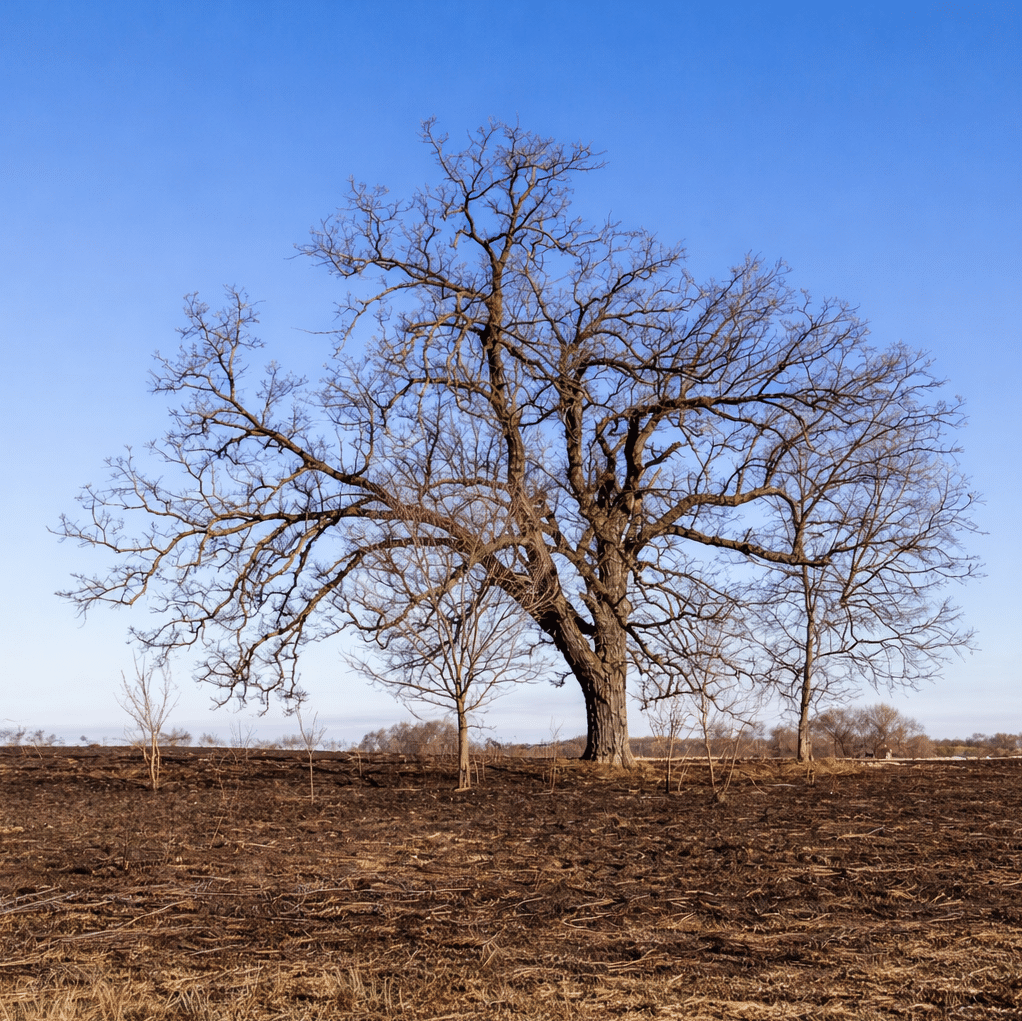 On a community or regional basis, tree loss can alter local ecosystems. Trees contribute to fire mitigation by shading forest floors. They contribute to watershed health by stabilizing soils. Trees provide habitat for animals. As a result of drought-related tree loss, there is an increased risk of wildfires. There is decreased water quality in local watersheds.
Regular monitoring of your trees is one of the most beneficial things you can do. When you observe anything out of the ordinary (unusual die-back, bark damage, pest activity, or a decline in a tree’s condition, regardless of how much you care for it), it is time to consult with a certified arborist.
An arborist can determine the cause of the problem and can recommend treatment options. Additionally, an arborist can safely prune your trees without causing additional stress.
Your Tree Wise Men is staffed by professionals who are skilled in identifying and addressing drought-stressed trees throughout the region. Whether you require a comprehensive assessment of your trees, selective pruning to alleviate drought stress, or recommendations for selecting drought-resistant species for a new planting, we are here to assist you in making decisions that will ensure the long-term viability of your trees.
Overgrown or unruly trees? Call Your Omaha Tree Trimming & Pruning Experts!
Don’t Let Drought Win
Drought is an inevitable component of living in the Midwest. However, the effects of drought on your trees are not predetermined. By using proper watering techniques, adequate mulching, considering the drought resistance characteristics of the species you choose, and consistently monitoring your trees, you can greatly enhance the likelihood of your trees surviving and potentially thriving through periods of drought.
Take a walk around your property today. Look for evidence of drought stress. Are leaves wilting? Is the canopy thinning? Has an unexplained portion of the tree died? If you see evidence of stress, don’t wait. Contact Your Tree Wise Men to schedule a consultation and allow us to assist you in giving your trees the professional care they deserve. Don’t let drought win. Take action now. Give your trees the best chance to survive and thrive.