Tree Diseases in Omaha: Identification, Prevention & Treatment
Last updated Thursday, March 19th, 2026
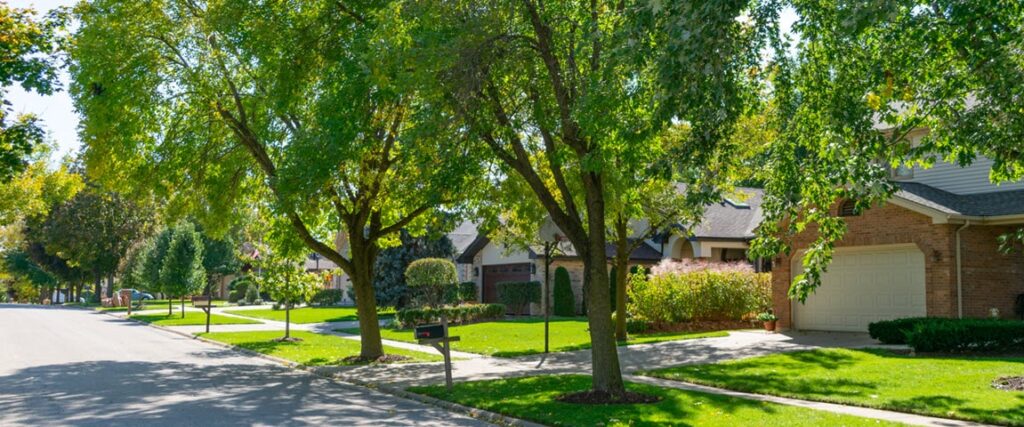
Trees can experience an array of diseases due to the humid continental climate found in Omaha. This environment provides perfect conditions for fungi to grow and thrive. Many root problems and invasive insects have also been identified in Nebraska. The primary purpose of this article is to identify and describe many of the most commonly occurring diseases threatening Nebraska’s trees, including how to prevent them and what treatment options are available.
Identifying tree diseases early is crucial. Many diseases, such as Dutch elm disease (DED) and oak wilt, can kill a healthy tree in just one growing season. Monitoring your trees on a regular basis and acting quickly will greatly increase the chances of saving your tree.
Identifying Warning Signs of Disease
Identify these warning signs while inspecting your trees during their growing season:
- Yellowing or browning leaves prior to the typical time frame for fall color changes
- Wilting leaves that do not respond to watering
- Abnormal leaf spots or lesions on the surface of leaves or abnormal leaf distortions
- Branches dying back toward the center of the tree
- Cracking bark or canker formation on the bark of the tree
- Honeydew drippings on the leaves (caused by sap-sucking insects)
It is very difficult to distinguish among many tree diseases based on symptoms. It is therefore extremely important to consult a certified arborist or contact the University of Nebraska-Lincoln (UNL) Extension Service before attempting to treat any disease. If you notice multiple branches are being affected, the structural integrity of the tree has been compromised, or you believe you have oak wilt or Dutch elm disease, contact a certified arborist immediately.
Overgrown or unruly trees? Call Your Omaha Tree Trimming & Pruning Experts!
Related Article(s)
How Drought Affects Nebraska Trees — What Homeowners Can Do
Common Fungal Diseases
The following is a description of some common diseases caused by fungi:
Dutch Elm Disease (DED)
Dutch Elm Disease is caused by Ophiostoma ulmi and O. novo-ulmi. These fungi are transmitted via elm bark beetles and root grafts. Initial symptoms may include yellowing and wilting on one side of the tree canopy. Following this, the leaves will turn brown and rapidly drop off. Brown streaking may be observed in the sapwood under the pealed bark. To manage this disease, prune the infected branches at least 10 feet below where the brown streaking begins. Dispose of all infected wood. Use systemic fungicide injections to protect valuable trees. Replace dead elms with DED-resistant varieties (such as ‘Valley Forge’ and ‘Princeton’).
Oak Wilt
Oak wilt is caused by Bretziella fagacearum. Oak wilt is transmitted by sap beetles in the April-July window and through root grafts. Infected red oaks exhibit brown-margined leaves and total loss of leaves in short order. White oaks lose leaves in a more gradual manner. Never prune oak trees during the April-July window. Seal any accidental wound to the oak tree immediately. Dig a trench to separate the roots of adjacent oak trees. Apply propiconazole to high-value oak trees using the injection method as soon as possible after diagnosis.
Apple Scab
Venturia inaequalis survives in fallen leaves throughout the year and produces spores during wet spring weather. Apple scab can be identified by the presence of olive-green to black velvety patches on the underside of apple leaves, premature leaf drop, and the presence of corky lesions on apples. Plant resistant crabapple varieties. Rake up and destroy fallen leaves each fall. Begin spraying fungicides (such as myclobutanil or captan on a 7-14 day schedule until petal fall on the trees at bud swell.
Anthracnose
Anthracnose is a group of fungal diseases that affect oaks, maples, sycamores, and ash. Anthracnose can be identified by the presence of brown or black lesions along the veins of leaves, scorched or tattered leaves, and premature defoliation. Most anthracnose infections are cosmetic. Healthy trees will recover. Remove fallen leaves, prune infected twig sections, and promote good air circulation. Fungicides (usually only necessary for high-value specimen trees) are not usually required unless the fungus becomes active.
Powdery Mildew
Powdery mildew produces a white or gray powder on the leaves, buds, and new shoots. Powdery mildew thrives in humid environments with warm daytime temperatures and cool nighttime temperatures. Choose resistant tree or shrub varieties. Improve air circulation by pruning the tree. Reduce fertilizer applications. Protect valuable ornamental plants with fungicides (thiophanate-methyl or chlorothalonil) at the first sign of infection.
Diplodia Tip Blight
Diplodia pinea infects mature pines, especially Austrian pine. Tip blight causes stunted and brown new growth, needle retention within the sheath, and damage moves from the lower branches upwards over a period of years. Use fungicides (propiconazole or thiophanate-methyl) at bud swell and again two weeks later. Prune and dispose of all diseased tissue.
Root & Crown Rot
Water molds (Phytophthora and Pythium) attack the roots of trees planted in poorly draining soil that receives too much moisture. Symptoms of root rot include reduced growth, wilting, thin canopies with yellow leaves, and discolored, soft roots. Prevent root rot by increasing drainage, reducing overwatering, and mulching no deeper than 2-3 inches (keeping it at least 2-3 inches away from the trunk). Consult with the UNL Extension Service to confirm which pathogen is causing the problem before any fungicide treatments are made.
Overgrown or unruly trees? Call Your Omaha Tree Trimming & Pruning Experts!
Insect Pests That Mimic Disease
Some insect pests mimic disease by creating damage to the tree and producing substances that make it appear as though the tree has a disease. Some examples of insects that mimic disease include:
Scale Insects
Scale insects are soft-bodied insects that excrete sticky honeydew that encourages the development of sooty mold. Armored scales resemble small bumps on the bark of trees and cause damage, but do not produce honeydew. Scale insects can reduce growth and cause yellowing and dieback. Dormant oil sprays can be used to kill overwintering scale insects. Systemic insecticides can be used to kill scale insects when they are actively crawling.
Emerald Ash Borer (EAB)
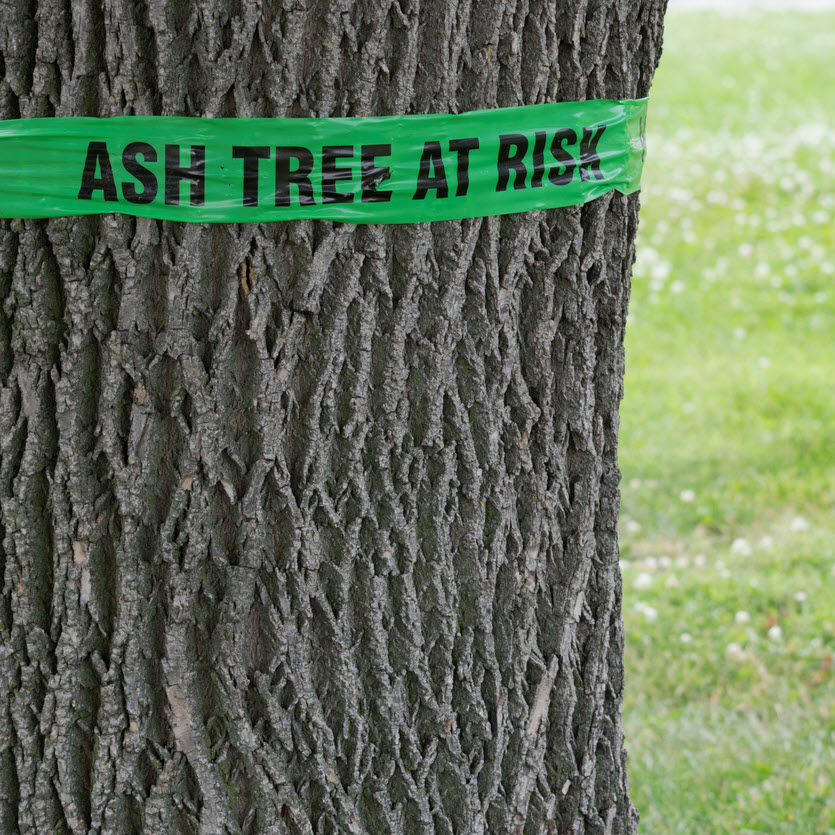 The Emerald Ash Borer (EAB) is a metallic green beetle that is killing all species of North American ash. EAB creates D-shaped exit holes, splits the bark, and causes a top-down dieback of the canopy and epicormic sprouts at the base of the trunk. Apply emamectin benzoate to high-value ash trees using the trunk injection method before the tree has lost 30-40% of its canopy. Contact the Nebraska Department of Agriculture if you suspect you have EAB and never transport ash firewood.
Japanese Beetle
Adult Japanese beetles chew holes in leaves from mid-June through mid-August. Grubs of Japanese beetles eat the roots of lawns. Hand-picking adult Japanese beetles into soapy water can help control small infestations. Imidacloprid soil insecticides can be used to kill grubs in the spring. Do not install Japanese beetle traps near valuable plants. They attract more beetles than they catch.
Strategies for Prevention
Prevention is key. There are several things you can do to prevent disease and insect infestations on your trees. These include:
- Select disease-resistant tree or shrub varieties for elm, oak, crabapple, and other susceptible species
- Plant your trees in well-draining soil, giving enough space between the trees for good air circulation
- Mulch around trees with a depth of 2-3 inches. Keep mulch away from the trunk of the tree.
- Water the trees at the base of the tree. Avoid getting the foliage wet
- Rake and remove fallen leaves from around the base of the tree each fall to remove potential fungal spore sources
- Only prune trees during the winter months. Never prune oaks during the April-July window.
- Disinfect your pruning equipment between each tree by soaking the equipment in 10% bleach solution or 70% isopropyl alcohol
- Regularly inspect your trees during the growing season: spring for scab and mildew, summer for EAB and beetles, fall for anthracnose, winter for scale